Retaining Wall Construction in Randolph, NJ: What Morris County Ground Decides
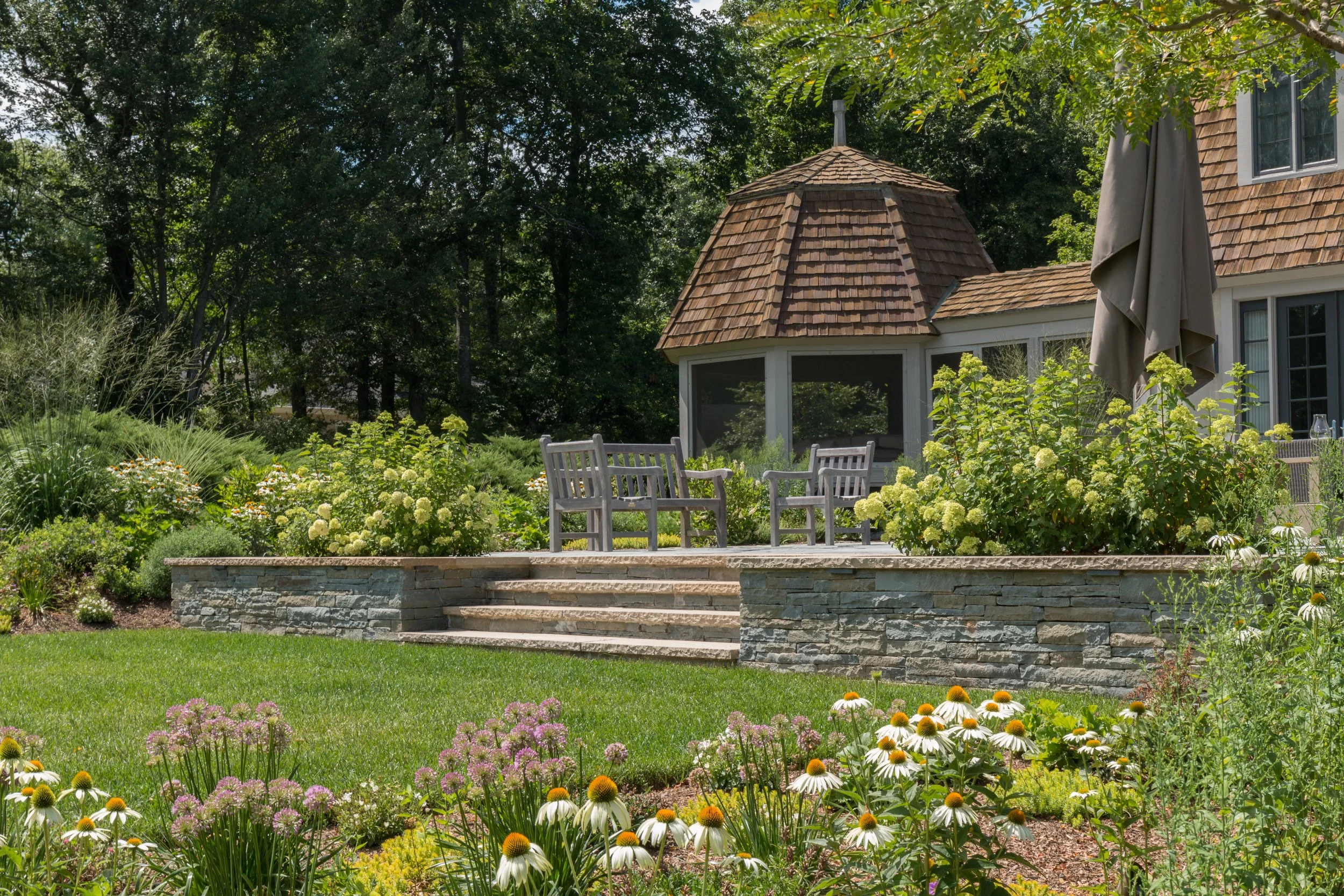
Morris County ground is the reason retaining wall construction in Randolph, NJ costs what it does, and the reason a wall built the same way in sandier soil would behave differently.
Clay that holds water, mature trees with root systems wider than their canopies, and summer storms that drop an inch of rain in twenty minutes are the three site conditions that shape almost every wall we build here. None of them appear in a brochure.
BTS Landscaping started when owner Brian Shernce, then 11 years old, knocked on hundreds of doors offering to mow lawns, and more than 20 years later the company still maintains the properties of the first two people who said yes.
Brian went on to study landscape architecture and business economics, and every wall we build follows a landscape architect's design adapted to the site. What follows is how this particular ground shapes that work.
Why Does Morris County Clay Change Retaining Wall Construction?
Morris County clay changes retaining wall construction because clay does not let water through. On a sandy site, rain falling behind a wall moves down and away on its own, and the drainage behind the face is a safety margin. In the clay soils common across Morris County, that same rain sits in the backfill and loads the wall.
The response is a wider excavation and a full drainage chimney of clean stone running the height of the wall, wrapped in filter fabric so the clay fines do not migrate in and seal it.
That means more excavation, more stone and more disposal than the same wall needs on sandier ground farther south. It is the honest reason a Randolph quote reads higher than a generic square-foot estimate found online.
How Do Mature Tree Roots Change Where a Retaining Wall Goes?
Mature tree roots often decide where a retaining wall goes outright. The properties we work on around Randolph and Mendham carry oaks and maples that predate the houses, and the structural roots on a tree that size extend far past the drip line.
A reinforced wall needs to excavate well back into the bank, which is exactly where those roots are. Cutting them buys terrace space and costs the tree, sometimes immediately and sometimes four years later when it comes down in a storm. We map the root plate before setting the wall line. On a fair number of projects, the wall moves rather than the tree.
What Gets Checked Before a Retaining Wall Line Is Set?
Root spread, the existing runoff path across the property, utility locations and the legal drainage discharge point all get checked before a retaining wall line is set. Those four settle the wall position more often than the plan drawing does. Checking them first keeps the design from being redrawn once the excavator is already on site.
What Do Summer Storms Do to an Undersized Retaining Wall?
Summer storms overload an undersized retaining wall faster than its drainage responds. A wall that copes with steady autumn rain still fails during a single convective storm that drops an inch in twenty minutes, because the ground behind it saturates faster than the drainage clears. The load on the face rises sharply for a few hours, and a wall with a thin drainage layer has no way to shed it.
Many of the leaning walls we get called to replace in this area failed that way rather than through gradual decline. Sizing the drainage for the worst hour rather than the average month is the difference. That decision gets made at construction, not afterward.
How Does a Retaining Wall Tie Into Stormwater on a New Jersey Property?
A retaining wall ties into stormwater through a discharge point planned deliberately, and sometimes formally. Water collected behind a wall has to go somewhere, and where the ground falls toward a neighbor or a foundation that point needs real thought, while some townships regulate what may be directed into a stormwater system or drainage easement.
We settle the discharge before the first course is set, because a wall whose drainage has nowhere to go is a wall with no drainage at all.
What Does a Retaining Wall Base Require in a New Jersey Freeze Cycle?
A retaining wall base in a New Jersey freeze cycle requires depth below frost and compaction in controlled lifts. Frost in northern New Jersey reaches deep enough that a footing placed too shallow lifts through a single winter. A base that heaves once telegraphs through every course above it for the rest of the life of the wall.
Aggregate has to be compacted in layers rather than dumped and leveled, because loose stone consolidates under load over the following two seasons. The base is a small share of the material cost. It is also most of the reason a wall still reads straight a decade on.
When Does a Retaining Wall Need Geogrid Reinforcement?
A retaining wall needs geogrid reinforcement once the weight of the block alone cannot hold the soil mass behind it, which arrives sooner than most homeowners assume.
Geogrid gets laid between courses and extends back into the retained soil, turning the bank and the wall into one reinforced mass. The length of that reach is set by the height of the wall and whatever sits above it.
A driveway, a pool deck or a parking pad above the wall is a surcharge, and a surcharge pushes even a three-foot wall past what an unreinforced detail covers. Reinforcement also widens the excavation. That loops straight back to the tree roots and the clay disposal.
How Does Material Get Chosen for a Retaining Wall in Randolph?
Material for a retaining wall in Randolph gets chosen by load first and appearance second. We build in natural stone and concrete pavers, and each behaves differently on a New Jersey slope.
Segmental concrete units are manufactured to published specifications with reinforcement tables behind them, which makes them predictable at height and straightforward to engineer.
Natural stone suits the older properties across Morris County and reads as though it predates the house. Dry-laid stone has practical height limits, though, and mortared stone needs its own footing below frost. The grade and the surcharge narrow the field before taste enters the conversation.
Related: Defining Your Madison, NJ Property Lines With a Retaining Wall

What Does Excavation and Disposal Involve on a Morris County Lot?
Excavation and disposal on a Morris County lot is a larger operation than the finished wall suggests.
Reinforced construction means opening the bank behind the wall to a depth set by the height, and in clay that excavation comes out heavy and wet. Spreading spoil on site works where there is lawn to absorb it and fails on a wooded or tightly bounded property, which describes a lot of Randolph.
Trucking spoil away is a real line item and one of the clearest differences between two quotes. Access is the other half of the equation. A property where a machine cannot reach the rear yard turns a two-day dig into something considerably longer.
What Does the Retaining Wall Construction Sequence Look Like?
The retaining wall construction sequence runs from layout and utility marking to excavation, base, block, reinforcement, caps and restoration. Base material goes in and gets compacted in lifts before a single block is set, and that stage is where a wall is either made or quietly compromised.
Block goes up course by course, with drainage stone and backfill placed and compacted behind it as the wall rises rather than all at the end. Reinforcement layers get laid at the intervals the design calls for, then caps, grading and restoration finish the job. The visible wall is the last quarter of the work.
What Does a Retaining Wall Site Look Like Partway Through?
A retaining wall site partway through looks worse than homeowners expect, and that is normal. The middle of a wall project is an open excavation, stockpiled stone and a disturbed lawn. We stage material to keep access open and restore the surrounding grade at the end, but a mid-build photograph of any wall looks alarming.
What Should a Homeowner Expect During Retaining Wall Construction?
A homeowner should expect machines on the property, deliveries of stone and block, and a stretch where the yard is not usable. We agree on the access route and staging area before anything arrives, because driving a loaded machine across a lawn in wet Morris County clay leaves ruts that take a season to recover.
Utility marking happens before excavation, and on older properties we expect to find services that appear on no plan, which is why naming the disruption at the proposal stage makes the build far easier.
How Does a Retaining Wall Change the Way a Sloped Yard Gets Used?
A retaining wall turns slope into usable ground. A bank too steep to mow safely becomes a level terrace that holds a table, a planting bed at a height where it gets tended, or a capped edge that doubles as seating around a fire feature.
Naming that use before construction starts changes the height, the setback from the house and whether the cap sits at seat height. A wall built only to hold soil holds soil. A wall built around an intended use does that and hands you a room you did not have.
How Does Retaining Wall Work Fit With the Rest of a Property Plan?
Retaining wall work usually comes first in a property plan, because grade decides everything downstream. Patios, plantings, lighting and drainage all sit on ground whose shape the wall determines.
Running conduit behind a wall while the excavation is open costs very little, while trenching for it afterward means taking apart finished work, so sequencing the whole property once is the cheapest version of the same result.
What Does Retaining Wall Construction Cost in Randolph?
Retaining wall construction cost in Randolph depends on height, length, access and buried scope far more than on the block on the face. A low garden wall on an open site with easy access sits at one end of the range.
A reinforced wall carrying a driveway on a tight Morris County lot, with clay spoil to remove and a machine that cannot reach the backyard, sits at the other, and the gap between them is wide.
We do not quote a figure per square foot before walking the property. That number is guesswork anywhere the ground is not flat and sandy, which covers most of this county. A measured scope holds through the build, while an assumed one moves once the bank is open.
Why Does a Retaining Wall Quote Arrive After the Site Visit?
A retaining wall quote arrives after the site visit because the buried scope cannot be estimated from a photograph on this kind of ground. We walk the slope, check where the water currently runs, look at the trees and test what comes out of the bank, and the proposal follows from that.
It takes longer than a same-day number, and it is the reason our figures hold through the build rather than moving once the excavation opens up.
What Separates Two Proposals for the Same Retaining Wall?
The buried quantities separate two proposals for the same retaining wall almost entirely. Compare excavation volume, tons of drainage stone, feet of pipe and a named discharge point, geogrid layers and spacing, and what happens to the spoil.
Two proposals naming the same block, cap and linear footage still describe structures that behave differently by year eight, and reviewing the retaining and seating walls we build alongside a quote shows what a complete scope includes on a finished Morris County property.
Walk the Slope for Your Retaining Wall Before the Ground Freezes
Schedule a site visit and we will map the roots, the runoff and the grade, then tell you plainly what this ground requires and what it costs to do properly.
BTS Landscaping puts the excavation, the drainage and the reinforcement in writing, so the wall you buy is judged on the parts that get buried. Book your retaining wall construction site visit with BTS Landscaping.
In Summary
Does Morris County clay change how a retaining wall gets built?
Morris County clay changes the backfill and the drainage behind a retaining wall. Clay holds water and drains slowly, so the drainage chimney carries more of the work here than it would on a sandy site, and the excavation behind the face usually runs wider.
What happens when a retaining wall has to run near a mature tree?
BTS Landscaping maps the root plate before setting the wall line. Cutting structural roots on a mature oak to gain two feet of terrace tends to cost the tree, so the wall usually moves instead.
Can retaining wall construction happen in late autumn in New Jersey?
Late autumn works well for retaining wall construction in New Jersey, and the ground is often easier to work than in spring. The limit is the first sustained freeze, since base material has to be compacted unfrozen for the wall to sit true.
How long before the ground around a new retaining wall settles?
Backfill compacted properly in lifts is stable immediately, which is the point of building it that way. The surrounding grade and plantings take a season to knit together.
Related: Beautify Your Sloped Property With a Retaining Wall in Randolph, NJ
Founded on a passion for nature, BTS Landscaping is committed to building and maintaining high-quality landscapes for discerning clients.
We hire only highly qualified, skilled workers who share our priority for the environment and satisfying customers. We strive to exceed expectations and provide maximum value on every project. Our goal is to make a positive impact on the lives of our clients, our employees, our community and the environment.